Friday, July 13, 2018

Crafting Spiderman: A Tribute to Steve Ditko


            Stan Lee is the face of Marvel Comics. The man, who has practically made a cameo appearance in most of the Marvel Studio films, has been the lead on creating an entire superhero universe that is beloved by millions of fans. Of these many heroes, Lee’s favorite creation, Spiderman, was not made solely by him. Comic book artist Steve Ditko was heavily influential on the design of the character. From the look of Spiderman’s webbed suit, to the young adult struggles that characterized Peter Parker, Ditko’s influence can be seen through different facets of Spiderman. Ditko passed away in late June at the age of 90 after a career working with both Marvel and DC comics; however, he was a very private man who rarely gave interviews and ended up leaving Marvel Comics in 1966 after a supposed disagreement with Stan Lee about the direction of certain characters (Atlantic). Steve Ditko may not have been in the spotlight for a majority of his career, but his influence on comic books are still seen in a modern context.
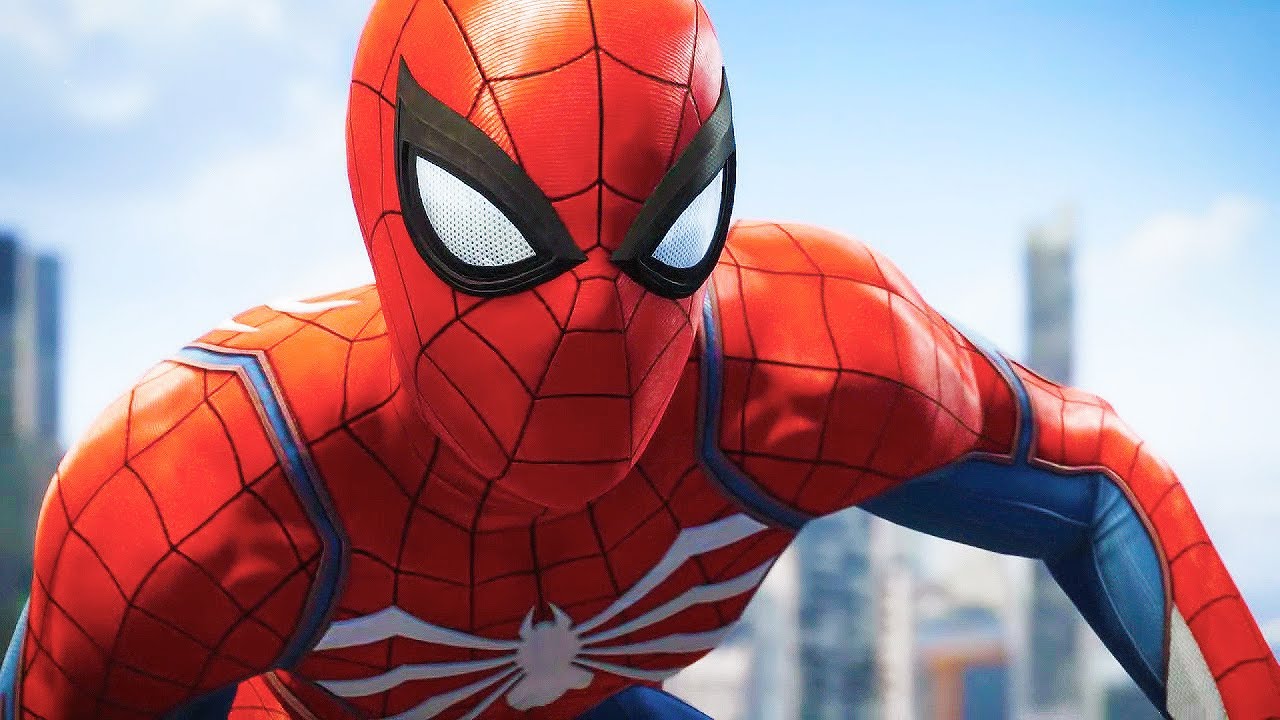
            In 2017’s Spiderman: Homecoming, there’s a scene late in the movie where, after fighting the Vulture at his lair, Peter is trapped under a pile of rubble as the rest of the building begins to crumble. Panic begins to set in as he realizes that he is too weak after the fight to get himself free. He begins to scream frantically for help doubting his abilities as a hero. As he struggles to lift the support beams, he sees his reflection in a puddle with half of his face showing the frightened young man, and the other showing his homemade Spiderman mask. Seeing these two halves inspires in him the confidence and strength to escape from the crumbling building and pursue Vulture. Besides being a great scene in the film (link below), it also showcases what Ditko brought to Spiderman’s character, vulnerability. While some heroes have powers to fight other worldly characters or have riches and resources few superheroes can attain, Peter Parker lacks these tropes.
            Ditko was a realist, and this influence is seen throughout his story-telling and character design. Underneath his persona as Spiderman, Peter is a normal young adult (minus the spider powers) with a story similar to many who struggle in their early life. Even his rogue’s gallery is packed with characters that underneath their villainous costumes, are normal people who happen to use their abilities for crime. The Vulture from Spiderman: Homecoming is a great example of Ditko’s style with him being a construction worker before deciding to create his flight suit from the alien technology left from the first Avengers movie. Peter’s costume also exhibits this realism. Instead of having armor or gadgets to support his crime fighting, Spiderman’s outfit leaves him exposed with many versions of the character making the costume himself out of materials found at his home. These are just a few examples of what Ditko brought to Spiderman’s character.
            Growing up, I knew about famous comic character creators: Stan Lee, Jack Kirby, Bob Kane, and Joe Shuster but never knew much about Steve Ditko. Hearing that he had passed away prompted me to research how important he was to the characters I read on a comic book page or watched on a screen. Learning of the man’s accomplishments from his innovative work with both Marvel and DC, it was difficult to figure out what to say about him. I chose to talk about Spiderman because Peter Parker is the perfect example of Ditko’s influence on comics. He brought realism to a genre known for the exact opposite and to see that style in modern superhero storytelling proves Steve Ditko was unique.
Leave a comment below about your favorite comic book characters or the creators behind those characters!

Friday, July 6, 2018

What Craig Ferguson Brought to Late Night


            It’s a Wednesday night. You have just finished a 9-5 shift at your job and are looking forward to a relaxing evening. After dinner has been cooked and other chores finished, you grab the tv remote, get comfy on the couch, and look to find something to watch. As you skip through the channels, you look for one of the many late-night shows starring Jimmy Fallon, Jimmy Kimmel, and Conan O’Brien. However, what grabs your attention is not any of these, but one starring a host that doesn’t seem to really care what happens during the show. This surprisingly doesn’t turn you off from watching, but instead, you find his jabs at his own show hilarious. He’s witty, interacts with the audience, calls out his producer for the low budget production, and every time he cusses, a different country’s flag appears on his mouth with a phrase from that country spoken in a cheesy accent. This odd detour from late-night continues with his robot side-kick at one end of the stage, and on the other end, a very demented looking horse named Secretariat who dances on command. So, what does a Scottish man, a talking robot, and two guys dressed in a horse suit have to do with a late-night talk show? Nothing, and at the same time, everything when it comes to explaining The Late Late Show with Craig Ferguson.
from left to right Geoff Peterson, Craig Ferguson, Secretariat
            Born in Glasgow, Scotland in 1962, Craig Ferguson became a rising star in Britain performing comedy, music, and theater until he moved to America where he co-starred on The Drew Carrey Show as Nigel Wick. Even while starring on the show, he continued to write for movies and television shows such as Saving Grace and Doc Martin as well as doing voice over work (all of the How to Train Your Dragon fans will know him as the voice of Gobber). Not until 2004 did Ferguson get his start by taking over The Late Late Show from previous host Craig Kilborn and to say he was an unexpected pick is certainly an understatement. Not just anyone can get the television spot that comes after David Letterman, and I am confident in saying that late-night audiences were not expecting his unique take on the medium.
            From the start of the show, and I mean literally, Ferguson mixes up what the standard monologue is. Take something as simple as where he stands in relation to the camera. Instead of him standing in the same spot with the camera getting a shot of him from the torso up, he moves around as if he’s performing a stand-up comedy routine, and depending on his delivery of a joke, he will inch closer and closer to the camera to the point that his face is almost touching the camera lens while he whispers the punchline. His monologue also consists of banter with the audience. As he comes out and the crowd claps and cheers, he will exclaim something along the lines of, “Thank you ladies and gentlemen, for your very genuine and totally not forced cheers and claps. They fakery is almost too much.” The audience ends up laughing at their own expense, but the monologue sets a trend for what Ferguson does best for the rest of the show, which is to twist what the standard late-night show is.
            Finishing the monologue, the show transitions to the tweets and email section with Craig, his robot side-kick Geoff Peterson (voiced Josh Robert Thompson), and Craig’s horse Secretariat answering fan questions. The banter between Craig and Geoff Peterson sometimes spawns an improv joke that will go throughout the entire show. In a Christmas eves eves eves episode (link below) with the stage decked out in holiday décor, and Secretariat wearing a silver Christmas star hat, Craig and Geoff received a tweet from a German fan named Hans who asked them for a good cartoon to watch while making home-made cigarettes? They began to answer the fan with “pervy German accents” saying instead that they enjoy “the simple pleasures of Daffy Dook.” This serious German version of the character becomes a gag for the rest of the segment with them adding that they both enjoy swapping logs at Christmas while enjoying the simple pleasures of this Daffy Dook character. This involves them continually going off script, which creates this sincerity to share with the audience that they don’t even know where the show will go.
            In contrast with all of this wackiness the show accomplishes, Ferguson does not shy away from difficulty or sadness. Probably my favorite monologue he has done on the show was not filled with gags or talking robots but instead a eulogy for his father Robert Ferguson (link below). His eulogy or “wake” was filled with background on his father, funny stories, and a sincere honesty and trust to show the audience the real him. That sincerity to not try to pretend that he was not in pain over his father’s passing exhibits Ferguson’s character and how he interjected that character. He was not apprehensive to show the audience who he really was. He was not in the business of appeasing every late-night fan. Ferguson took the flashy production, scripted jokes, celebrity interviews, of late-night and showed the reality of it and how funny that reality can be. To quote his catch phrase when starting every show, “It’s a great day for America everyone!” I can’t speak for everyone, but it was a great day for me anytime I got to unwind after a long day and watch The Late Late Show with Craig Ferguson.
Do you have a favorite late-night talk show? Let me know in the comments!
Eulogy to his Father: https://www.youtube.com/watch?v=E8DHP6GoN7c&t=261s       


Friday, June 29, 2018

The Storytelling Power of a Complex Villain


            I remember the first time I watched Christopher Nolan’s The Dark Knight. I sat in the large theater auditorium with candy at the ready to see what many critics were citing as an evolution in superhero films. As the dark, smoky, blue flamed Batman logo came across the screen, the now famous opening scene began, and we were introduced to the Joker. Right from the beginning, Nolan’s version distinguished himself from the Mark Hamill animated Joker and Jack Nicholson’s famous portrayal of the character. This Joker was malevolent with an iron purpose but also sadistically funny. He would go off on a philosophical tangent, and then, in the same scene, transform into the wacky clown persona the character is known for but with an uncannily darker and tragic twist. What ended up being the most thought provoking and terrifying aspect of the character was just how relatable he was to me.
Heath Ledger as the Joker
            No, I have never taken the opportunity in my spare time to conquer Gotham City, but the idea that there is a potential villain in all of us is powerful. The Joker’s motivation in The Dark Knight is that anyone of us has the capability of being as evil as him. To demonstrate this, he tries to break Harvey Dent and Batman with him turning the former into a monster through trials that would stagger anyone’s moral grounding. Even at the end of the film he tells Batman, “You see, madness, as you know, is like gravity. All it takes is a little push” before laughing manically at him changing Harvey Dent into Two-Face. While the Joker is one of the biggest villains in pop culture, there are others that affect audiences in a similar manner. A character who can resemble the worst parts of humanity, and yet, be entertaining and thought provoking. A character who an audience can empathize with or understand that character’s actions regardless of morally shaky ground they take. It’s both fascinating and scary but not a recent development.
            Archetypes of heroes and villains are nothing new to storytelling. They have existed throughout human history dating back to ancient mythologies and religious texts because without conflict, there really is not a story to be told. With a problem, most of the time provided by an antagonist, audiences can follow the hero’s journey to beat the villain. The one who is in the moral right defeating that who possess an immoral nature. This self-insertion into these archetypes is part of why we gravitate towards stories. We love to watch an underdog like David defeating the towering Goliath in battle and to envision ourselves as David being the hero, but villains take on many forms beyond just a giant. Not all villains are characterized so simply.
Bryan Cranston as Walter White
            One critical aspect of a complex villain is for the character to follow an inverted journey compared to a protagonist. One of my favorite characters in pop culture is Walter White from the show Breaking Bad. White is unique because his story follows this tragic transformation from high school chemistry teacher to drug kingpin, Heisenberg. A dramatic shift, but White’s complexity lends the character credibility throughout the series with each heinous act. If you have not seen the entire series (first off, go watch it now), his motivation to get into the meth trade begins with trying to support his family because of a terminal cancer diagnosis. As he delves deeper into that trade, he becomes accustomed to power and the corruption it brings. He loses sight of that noble crusade to provide for his family after his death, which brought him into that dangerous world. An example of this change happens in a later season when tells his partner Jesse Pinkman, “You asked me if I was in the meth business or the money business. Neither. I’m in the empire business.” Clearly showcasing his differing priorities from the beginning of the series, Walter White has been consumed by his Heisenberg persona, and viewers see the complexity of that change on his character.
            Regardless of the mediums like superhero films, television series, and novels, an antagonist can range from simple to complex. They can be the character who is in it solely for power, vengeance, or they can simply be a monster. Classic villains from different mediums within pop culture: Sauron, Darth Vader, and Norman Bates are well known for these traits, and have established a trend for other writers to follow with their antagonists. However, to me, scarier and more thought-provoking villains are those who an audience can self-insert into and sympathize with. Characters like the Joker and Walter White allow an audience to self-reflect on themselves by asking the question, would I be capable of doing that if pushed far enough into darkness? That is good storytelling.
Name your top 5 favorite villains in the comments!
My list:
1.     The Joker, no specific version
2.     Walter White from Breaking Bad
3.     Hans Landa from Inglorious Bastards
4.     Gollum from Lord of the Rings
5.     Judge Holden from Blood Meridian


Thank You Stan Lee

            Let’s start with a story. My first experience with a superhero video game was the PlayStation classic Spiderma...